Wine is food.
That's the starting point, and in many ways the whole point. At Boonville Road Wines, wine isn't a trophy or a showpiece — it's part of the meal. It's the thing on the table that makes the food around it taste better. An elegant condiment, if you want to be precise about it.
Everything we do follows from that idea.
The winemaker
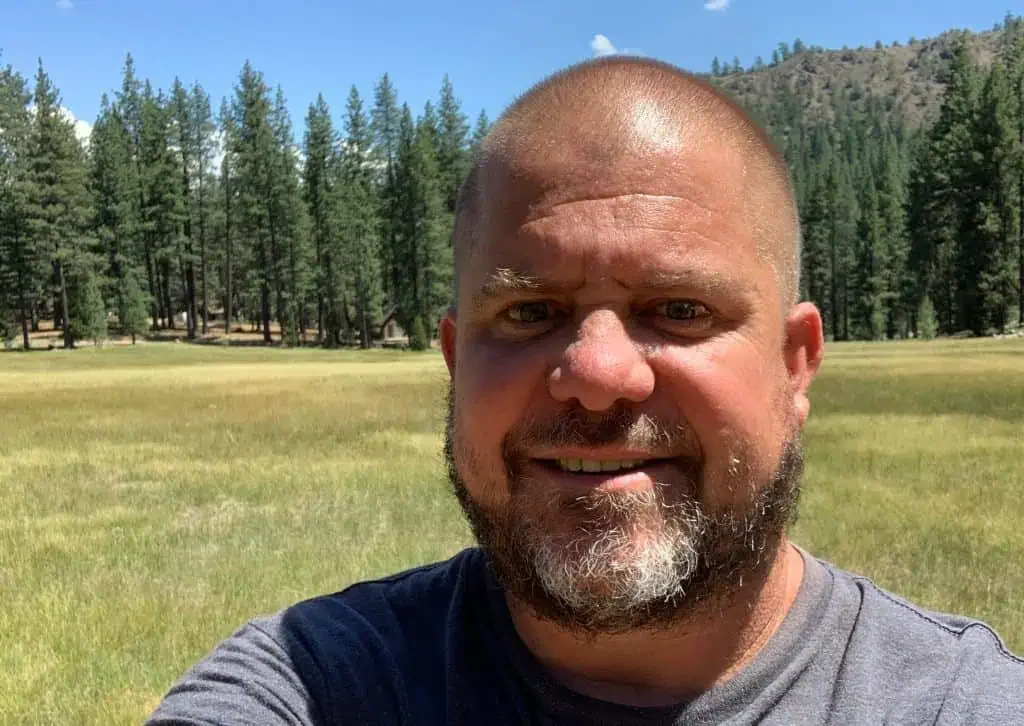
Boonville Road Wines is a small Mendocino County label founded by Ed Donovan. Ed's path to winemaking wasn't direct. He studied at Stanford, earned a Masters in American Studies at UT Austin, and was well into a PhD on media and civil rights before the dissertation gave way to something else entirely. While his wife started teaching at Mendocino College, Ed was living in a cabin in the Anderson Valley, and the pull of the place — the vineyards, the people, the work — proved stronger than the academic track.
An early stint at Martin's Wine Cellar in New Orleans had already planted the seed. Making $8.50 an hour with a Stanford degree, but drinking his way through Beaucastel, Burgundy, and Bordeaux on staff pours, Ed developed a palate shaped by the Old World long before he ever made a barrel of his own.
He worked at Navarro Vineyards, then in sales at Campovida, and in 2015 convinced a winemaker there to let him make a single barrel. That was the hook. The first vintage under the Boonville Road Wines label came in 2016.
The philosophy
Mendocino County grows some of the most distinctive fruit in California, but too often that fruit gets ripened to the hilt and handled heavily — the wines come out overripe, over-extracted, and over-oaked. We're trying to do something different.
We pick earlier than most, because we think the best wines are made from fruit with natural acidity intact. We ferment on native yeasts in open-top wooden fermenters, mostly whole-cluster, mostly foot-trodden. We settle the wine after pressing, rack off the heaviest lees once, and leave it alone.
We use only neutral oak. We want the fruit and the site to come through, not the barrel. A little SO2, and that's the extent of the intervention.
The wines we're after are fresh, mineral, and pure. Lower in alcohol. Higher in acid. Wines that belong on a dinner table, not in a cellar waiting for a special occasion.
The vineyards
We source from some of Mendocino County's most distinctive sites, and we work to build direct relationships with growers whose farming aligns with how we want to make wine.
Cole Ranch — The smallest AVA in the United States, tucked into the hills between Anderson Valley and Ukiah. We source Riesling and Cabernet Sauvignon here, including fruit from vines planted in 1972.
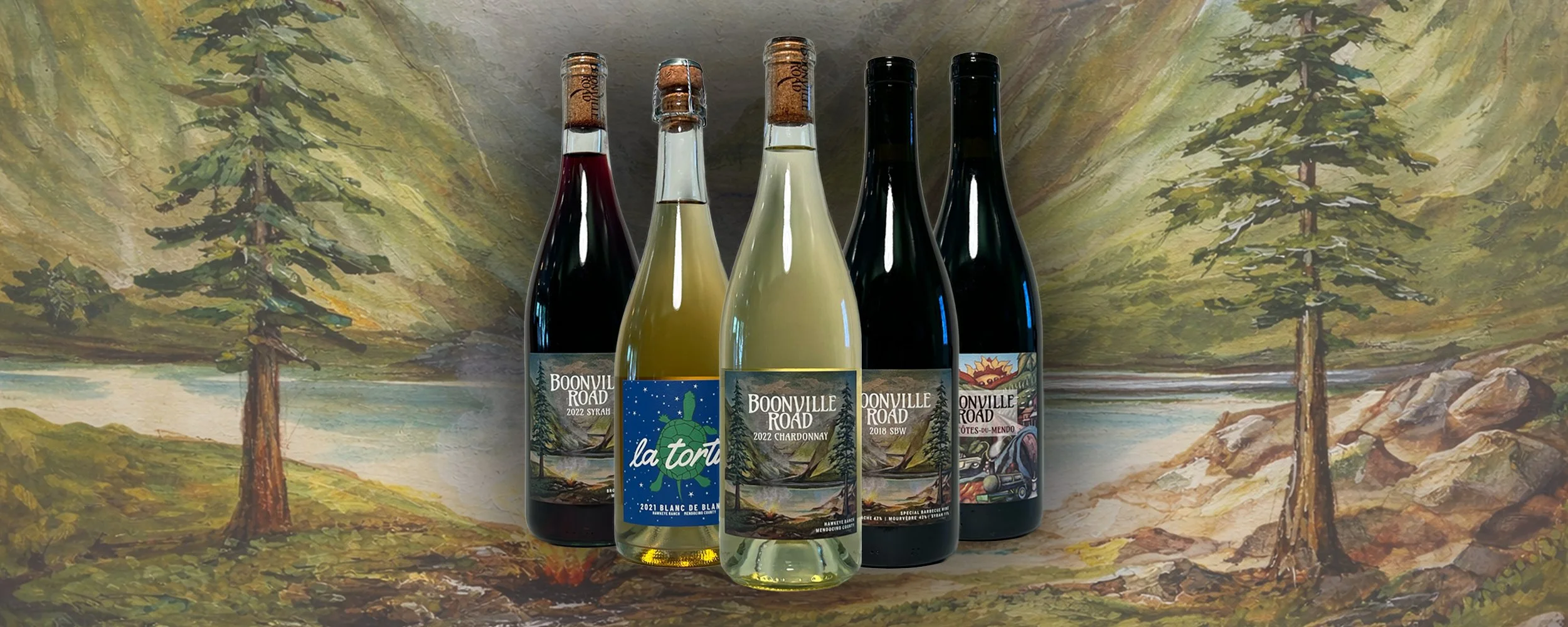
Broken Leg Vineyard — Anderson Valley. Cool-climate Syrah with the kind of white-pepper, cool-aspect character that's hard to find in California.
Alder Springs Vineyard — High-elevation fruit, including the Mourvèdre and Grenache that anchor some of our most expressive bottlings.
Casa Verde Vineyard — Old-vine Carignan from Redwood Valley, farmed with a patience that shows in the glass.
A small operation, on purpose
We're tiny — roughly a thousand cases in a typical vintage — and we intend to stay small enough to keep our hands on every lot. That means meticulous sorting, cooler fermentations, and the kind of attention that only makes sense when you're not trying to scale.
It also means we're selective about where the wines go. If you're drinking Boonville Road, it's because someone along the way — a grower, a sommelier, a shop owner, a friend at a dinner table — decided it belonged there.
Press
For more on Ed and the project, see Alder Yarrow's interview at Vinography, and the Wine Write feature on our approach to Mendocino County.